
Experienced editor Natascha Biebow shares tips for how
to create a SERIES that keeps on selling.
You
have a great idea and you are so excited you can see books and books on
the shelves with this character, this premise and this format. But
before you create them ALL and pitch them to an agent or editor, wait! Did you know that almost all bestselling picture book series began with just ONE standout book?
So, what makes a good start for building a series?
Nine times out of ten, it is the success of the (first) picture book that leads editors and creators back to the table to begin thinking about the possibility of a sequel. Picture book series grow organically. The best series books not only capitalize on what made the first book so successful with young readers, but they also add an additional element to each new book in the sequence to keep it fresh and ensure children remain engaged.
Character-led series:
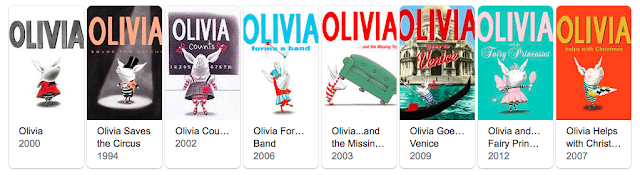 |
| Olivia series by Ian Falconer |
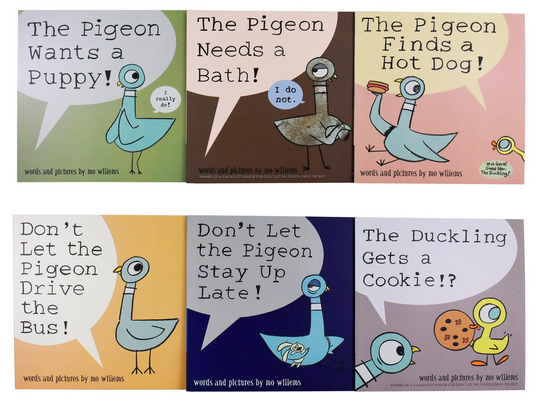 |
| Pigeon series by Mo Willems |
Similarly, Mo Willems’ pigeon character in Don’t Let Pigeon Drive the Bus
struck a chord because the Pigeon is so imminently relatable. When the
bus driver has to leave, he asks the reader to not allow the Pigeon to
drive the bus. The Pigeon tries everything, but the readers keep on
telling him, "NOOOO!", making the Pigeon angrier and angrier. Pigeon’s
fantasy is every child’s fantasy. What child wouldn’t like to have a go
at driving at bus? Again, it is the voice that stands out – and the
playful format and humorous banter that involves the reader directly,
makes for a winning interactive formula that is a great basis for future
titles.
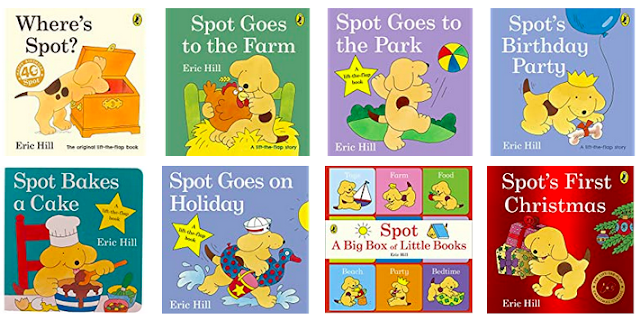 |
| Spot series by Eric Hill |
Sometimes, it’s the simple that endures. Take Spot who first starred in the lift-the-flap story Where’s Spot? in
1980. In 1978 Eric Hill made up a story about a small puppy to read to
his son at bedtime. Now a childhood staple, the little dog’s child-like
adventures take toddlers through their first routines, experiences and
holidays.
Concept-led series:
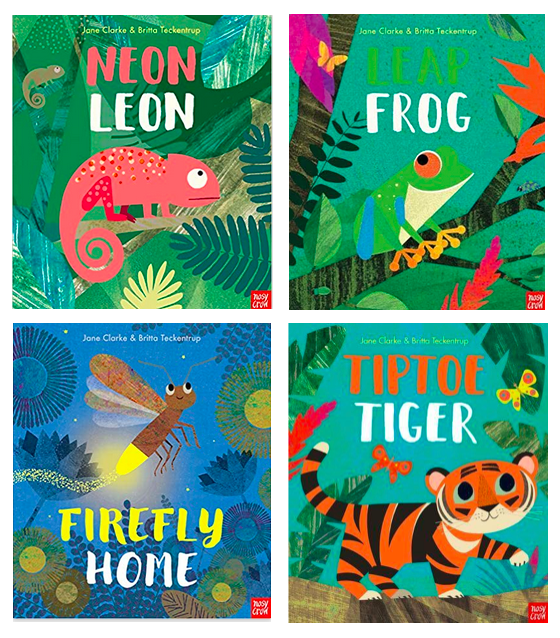 |
| Neon series by Jane Clarke and Britta Teckentrup |
Bestselling author Jane Clarke’s Neon Leon
series started with a picture book story about Leon, an orange
chameleon who doesn’t blend in; Leon longs for a friend and to fit in.
The narrative voice involves the reader with questions, making the books
conversational and interactive in a fresh, new way. To cap this, the
publisher added a neon ink finish throughout (!), which made the books
stand out in the market. Jane says that the contract for the sequels was
a direct result of Britta Teckentrup's illustrations which were so
brilliant, and because she’s so busy, the publishers were keen to lock
Britta (and Jane as the author) into a contract for a further three
books – even though there were no further texts at that point.
I asked Jane what were the parameters she needed to follow to make sure
the books 'fit' together alongside each other? She says, “The main
parameter became the 'neon' colours. I was told what colours worked best
in neon – orange, green, yellow and pink – and was asked to think of
characters that would fit those colours. I came up with a story about a
fish for the pink one, but was told the pink wasn't working as a colour
and was asked to do something orange and furry – hence the tiger.”
The next challenge was how to make the books feel like a series yet stand out as individual books? Jane says she did this “by
keeping to the parameters above, and by keeping the word count and tone
of the writing similar. It was easy to make them stand out as
individual books because I used a different character each time. Neon
Leon's a chameleon. Then there's the self-explanatory Firefly Home, Leap Frog and Tiptoe Tiger.”
 |
| The Questioneers series by Andrea Beaty and David Roberts |
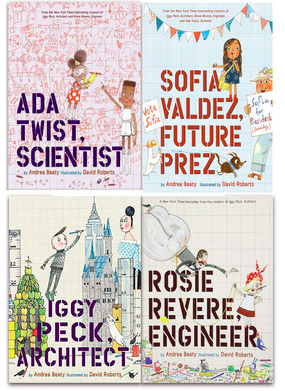
Here’s a different one: Andrea Beaty wrote Iggy Peck, Architect inspired by her son, who was always building things. She thought: “What if there was a kid who wanted to be an architect?” and the rhyming text developed from there.
The editor Susan Van Meter’s pairing of the text with David Roberts,
created an unusual, quirky and characterful look. For a long time after
the book became a success, Beaty tried to come up with some other
adventures for Iggy, but these felt boring, as if his story had already
been told. So Beaty looked closely at the kids she met in the classroom,
and a shy girl caught her eye. What would her story be, she wondered?
Rosie Revere would be an engineer, she decided. “I really made her an
engineer because I wanted to see what kind of crazy things David
Roberts would come up with because he had done such a marvelous job with
Iggy Peck, with the diaper towers and the bridge at the end with the
underwear on the top,” she says in an interview for Reading Rockets.
Ada Twist, Scientist
had a similar beginning – Beaty stresses that she wanted to write about
the curious kid who is a thinker. The books are all about curiosity: “I
don't really approach them as exploring those careers, even though
people think, 'Oh, so you write about engineers,' but I don't. I write
about kids, and I write about their passions and being true to
themselves and curiosity and perseverance and those kind of things
because I think that's far more interesting, and it's far more
universal.”
By making the books child-centred, Beaty created both a character and concept-led series idea!
 |
| Baby Loves Science series by Ruth Spiro, illustrated by Irene Chan |
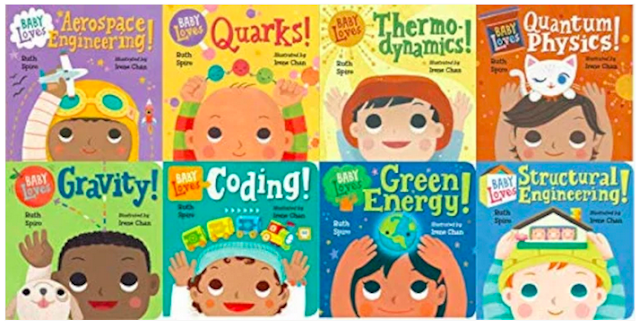
Ruth Spiro and Irene Chan's board book series Baby Loves Science began with a concept and two books in 2014, Baby Loves Quarks and Baby Loves Scientists, and it’s still going strong.
Spiro wanted to create STEM books for babies. In her blog, she explains how this came about: “In 2010, The New York Times ran the article 'Picture Books No Longer a Staple for Children'. It
attributed a drop in picture book sales to the choice some parents were
making to bypass picture books for their very young children in favor
of more 'sophisticated' reading material. I was discussing the article
with friends and wondered aloud, 'What do these parents want, quantum
physics for babies?'”
And so she created it. Arguably, the
market for picture books has picked up again, however, Spiro saw a gap
in the market and created books to fill it – targeting parents who
wanted their children to read big-kid books and advance their children’s
skills earlier.
 |
| Oi series by Kes Gray and Jim Field |
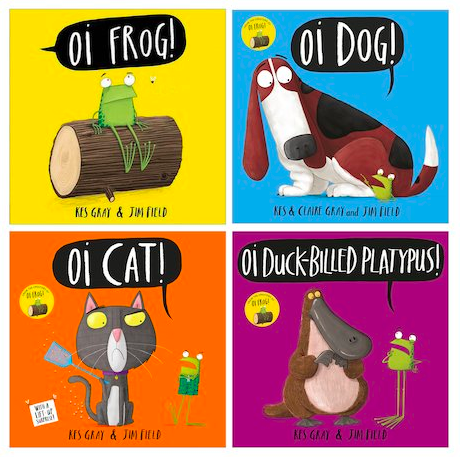
Some might have said it wouldn’t work as a picture book because its rhyming text is tricky to translate for co-editions, but the silly, read-aloud appeal to children discovering language is undeniable. The characters – the frog and dog – are definitely fun, but they are secondary to the premise: the books are a long-running gag that delivers a funny punch line in the final spread of each book. And it is certainly Jim Field's execution of the word play with new visual puns that has made this series so compelling and irresistible. Each title in the subsequent series keeps readers guessing – what will the frog do now? – and enjoying the fun of language play in new and unexpected ways.
 |
| ... Love Underpants Series by Claire Freedman and Ben Cort |
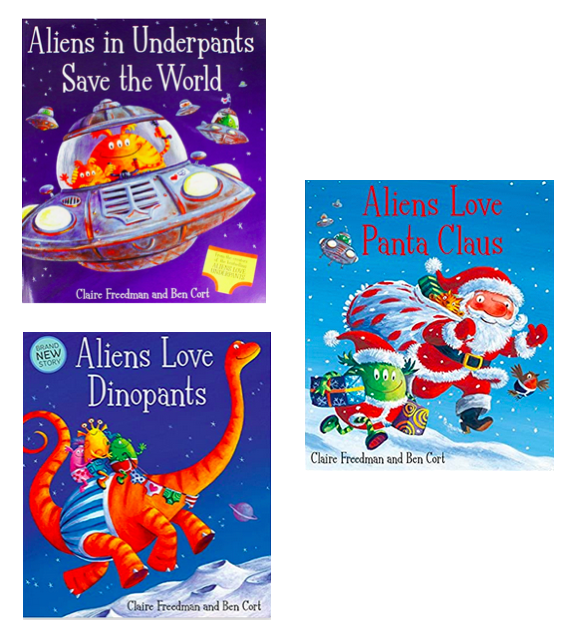 |
| Aliens series by Claire Freedman and Ben Cort |
Format-led series:
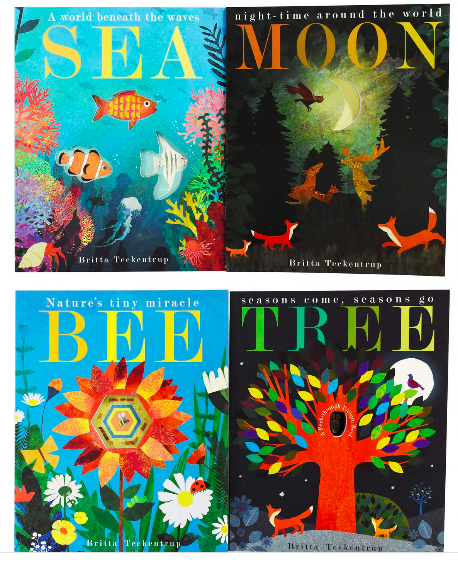 |
| A Peek Through Nature series by Britta Teckentrup |
Sometimes a concept-led series can be enhanced by the format, such as in Britta Teckentrup’s A Peek Through Nature series,
which features cutouts that create clever windows through which to
explore nature. The typography and nature themes tie the books together,
creating a collectable series.
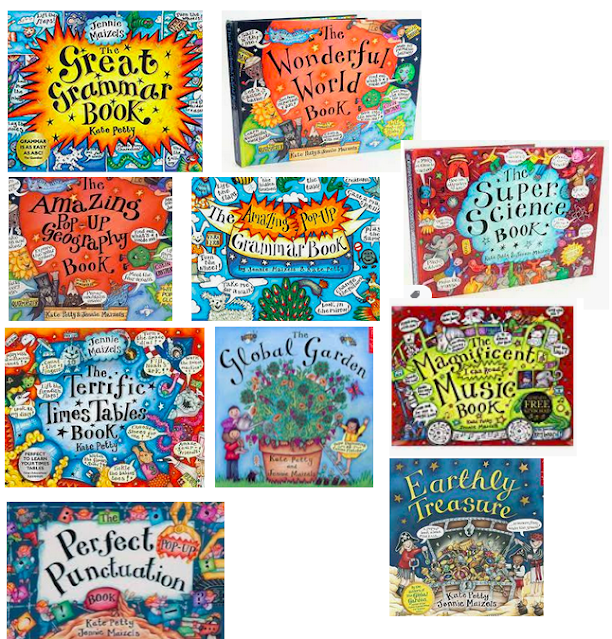 |
| Innovative Pop-up Nonfiction series by Kate Petty and Jennie Maizels (PRH) |
In
another example, innovator Kate Petty was a trailblazer in non-fiction,
believing that it should not be a boring textbook experience, but
rather an amazing interactive learning journey. The solution? Flaps,
wheels, pop-ups and other inventive paper engineering. The music book
has a keyboard, the geography book a pop-up globe!
No topic was off-limits: starting with The Great Grammar Book,
it was the interactive format that was the driving force for chunking
down and presenting key information to make it fun, riveting and
accessible to young readers. The talented illustrator, Jennie Maizels,
and the paper engineer(s) were just as instrumental to the winning team
behind creating this amazing, enduring and bestselling series.
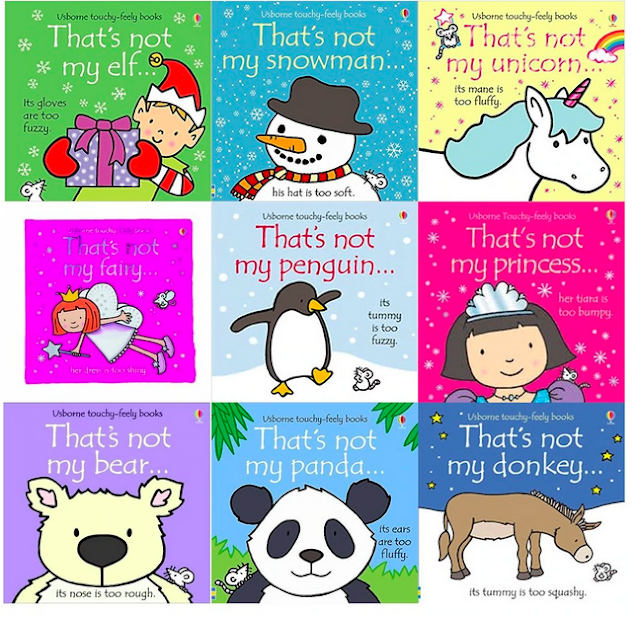 |
| That's Not My... series by Fiona Watt and Rachel Wells (Usborne) |
‘That’s not my … (main character)’,
‘its (attribute) is too … (adjective linked to touch-and-feel elements).’
Plus a punch line surprise: ‘That’s my…!’.
A mouse is hidden in the pictures on each spread.
The conversational voice built on the interactive reading experience of sharing a novelty book with a young child to create a simple storyline with the all-important surprise element that tickles toddlers’ funny bones. It was a hit and incredibly there are now 69 titles in the series!
Thinking laterally is key to creating a fresh angle and appealing hook for each new book in a series, but reassuringly, they all started with the joy of just one bestselling book. So, tempting though it is, focus on creating that standout and resist the temptation to create cookie-cutter series from the get-go.
______________________________________________________________________________________

Natascha Biebow is an experienced children's book editor, coach and mentor and founder of Blue Elephant Storyshaping. She loves to help authors and illustrators at all levels to shape their stories and fine-tune their work pre-submission. She is the author of the award-winning nonfiction picture book The Crayon Man: The True Story of the Invention of Crayola Crayon.
* Logo of animals cooking: by kind permission of Lizzie Finlay